Riverside, California
Cane Corso Puppies for Sale
We’re Alex and Chico, two brothers raising Cane Corsos at home in Riverside. One litter at a time, in the house, handled from birth.
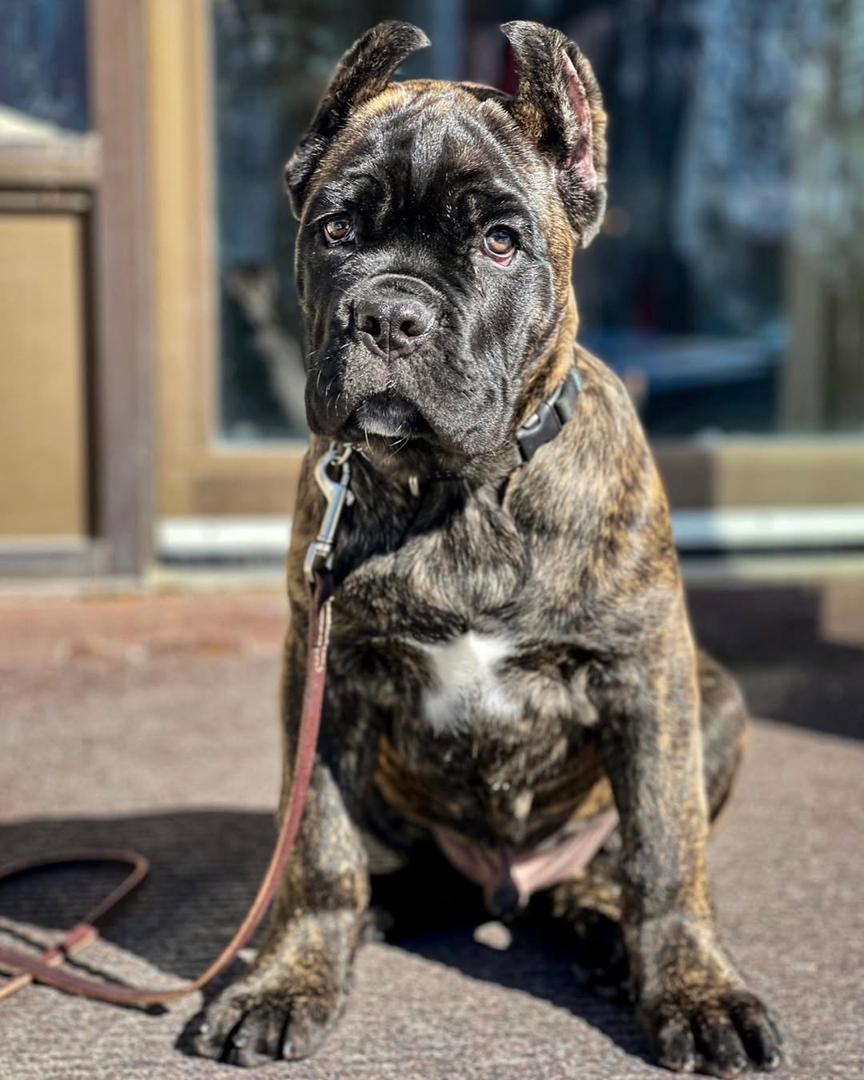
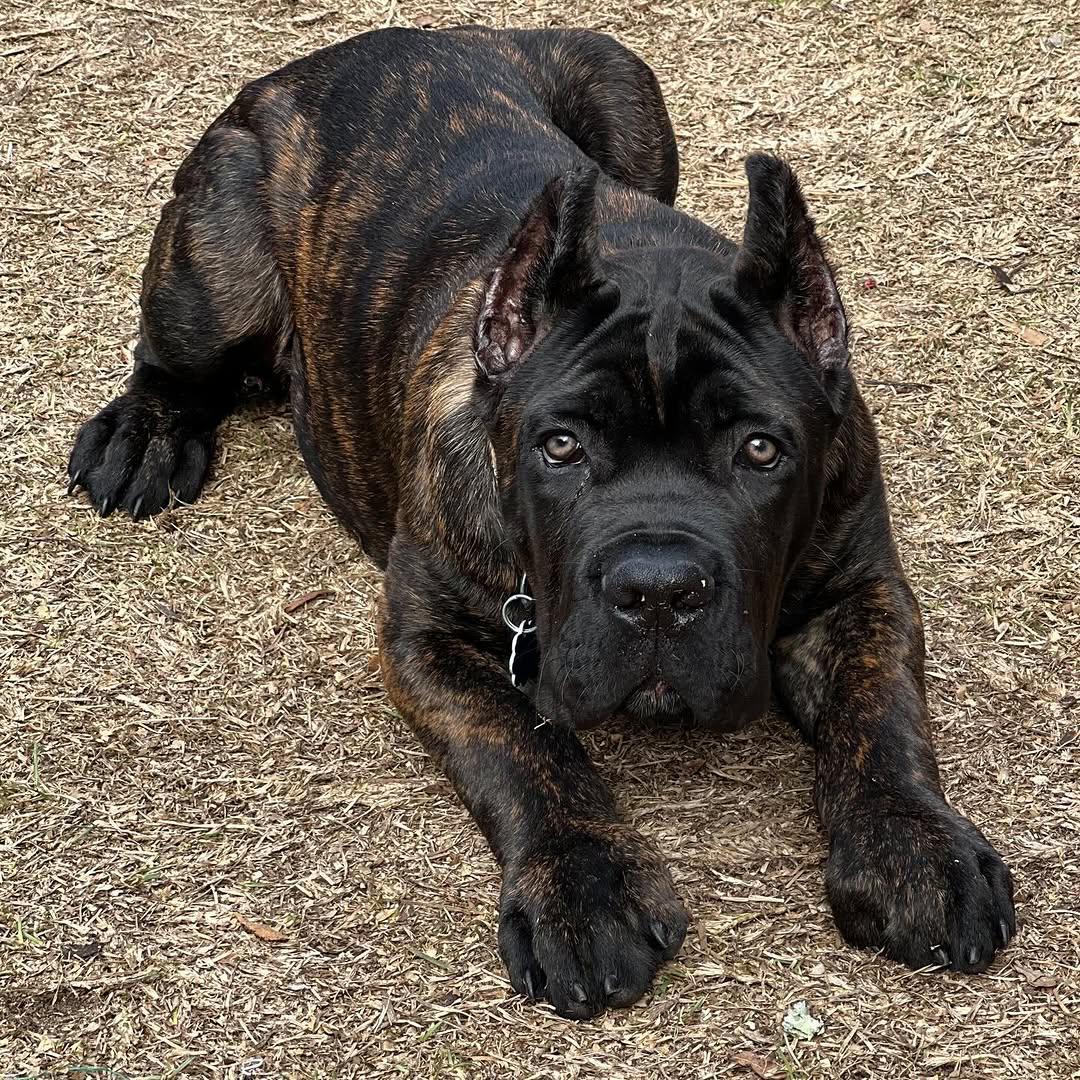
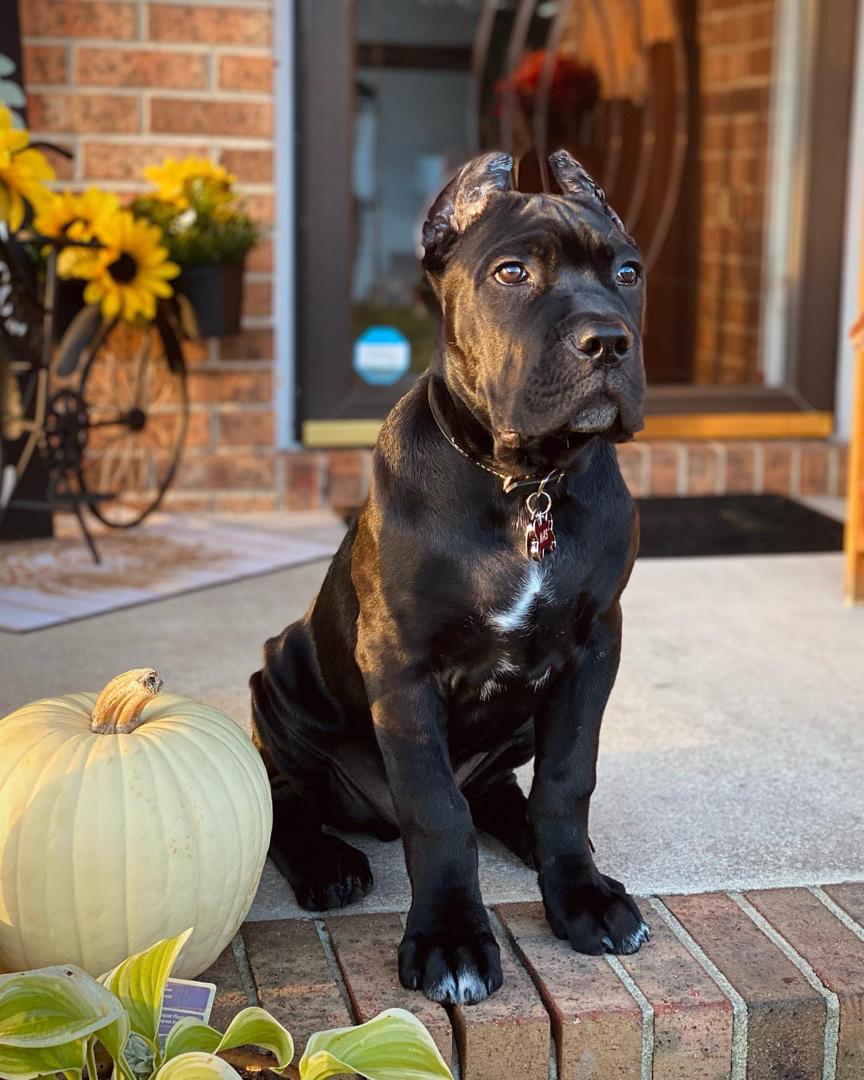
There are 6 Cane Corso puppies here right now, 5 males and 1 female, aged eight to eleven weeks. 3 have cropped ears and 3 are natural, and every card says which.
Who we are
Two brothers in Riverside, California. We kept Corsos for years before we ever bred one, and we still run a single litter at a time.
That is not modesty. It is capacity.
Puppies live in the house here. They are underfoot in the kitchen, they meet everyone who comes through the door, and they are handled every day from the week they are born. You cannot do that with four litters on the ground. Something gives, and what gives is the part that matters most.
Available now
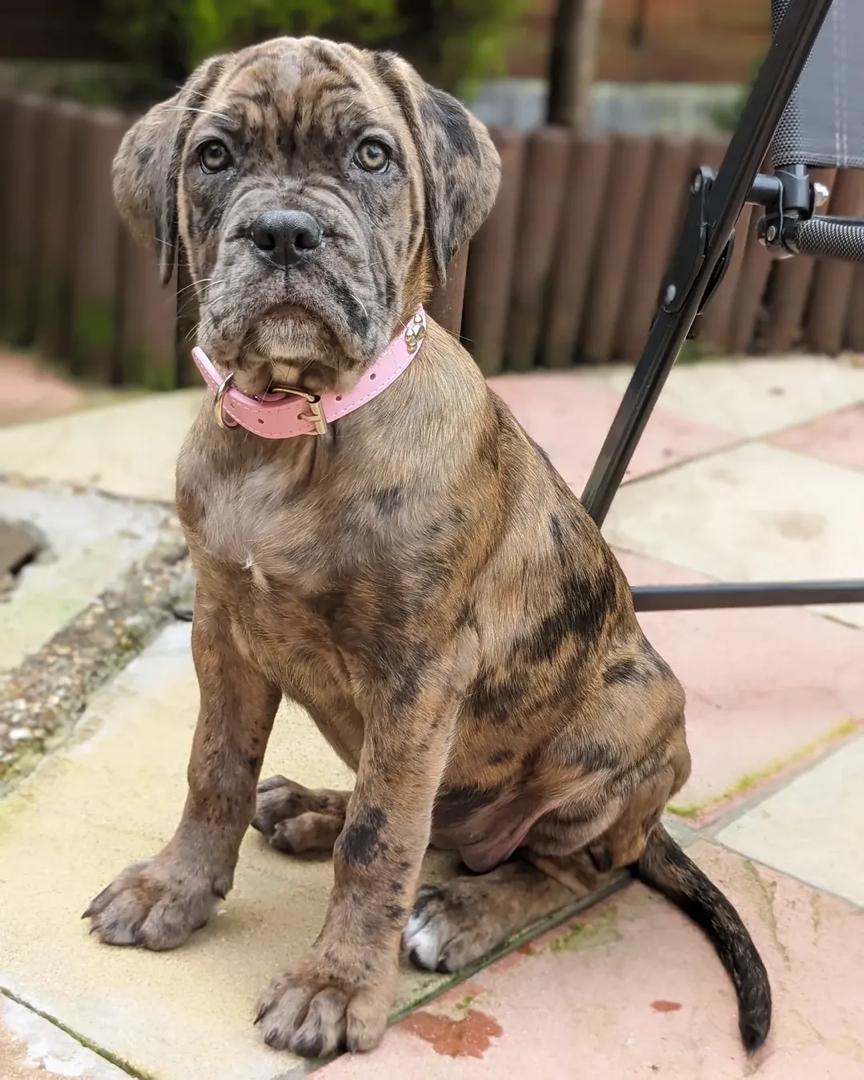
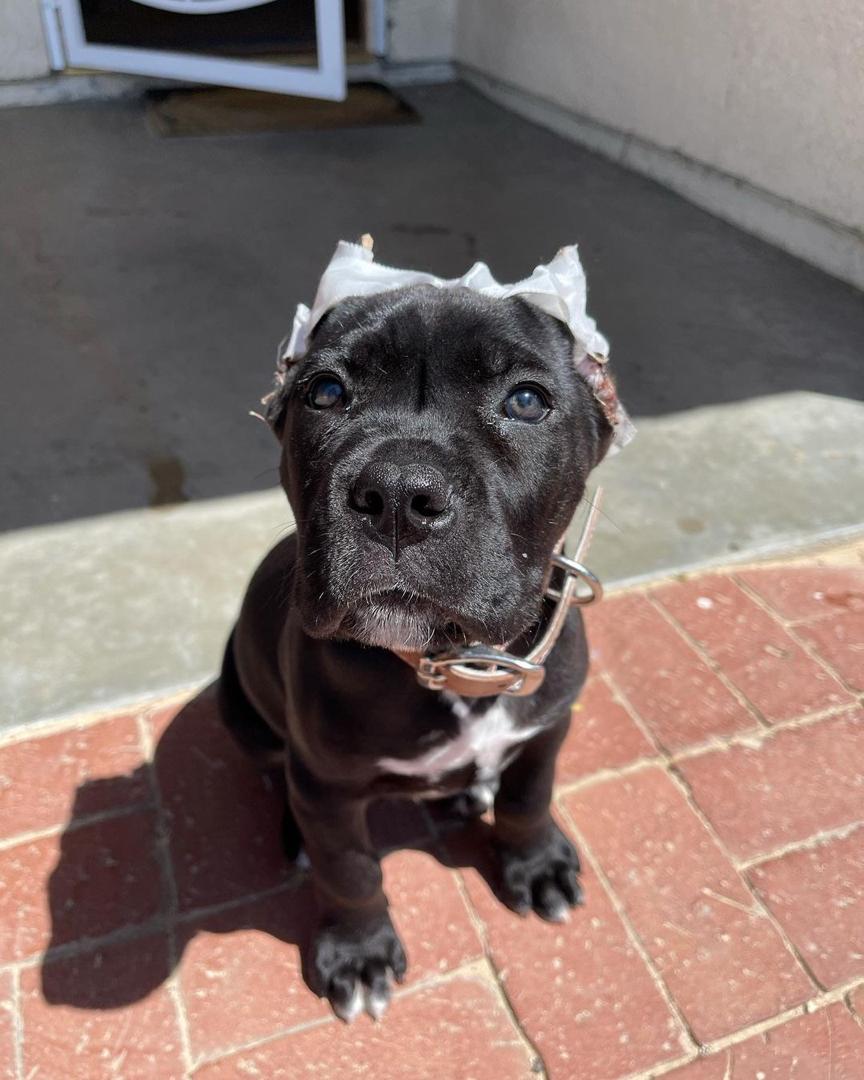
Every one is here in Riverside today and the photograph is of that actual puppy. Colour, sex, age and ears are on each card.

What a Cane Corso actually is
An Italian guardian breed, kept on farms for centuries to watch property and move livestock. A male finishes at 99 to 110lb and stands 25 to 27.5 inches at the shoulder. They live nine to twelve years.
Three things define them, and none are quite what people expect.
They are calmer than you think. A grown Corso sleeps most of the day. Two proper walks and some mental work and they are done. The puppy year is real work. The adult is not.
They bond to one household, hard. Ours follow us room to room and settle wherever we land. They are polite to visitors, but nobody in the room is confused about whose dog it is.
They watch without being reactive. A good Corso notices the car that slows outside, gets up, looks, and decides. A dog that barks at everything is not showing guarding instinct. It is showing poor nerves, and the two get confused constantly.
Who should not buy one
Worth saying near the top rather than in the small print.
- First-time dog owners. Not because a Corso is vicious, but because it is a lot of dog, and a mistake at 110lb costs more than the same mistake at 20lb.
- Anyone out twelve hours a day. They do badly alone and they will tell you so through your door frames.
- Anyone who wants a dog that loves everyone. That is a Labrador, and there is nothing wrong with wanting one.
- Anyone who will not do the first year. An untrained Corso at two is a serious problem, and rehoming one is very hard. What that year involves.
If you read that and recognised your own situation, tell us. We would far rather say so now than find out at the handover.
Cropped and natural
We crop, and we also keep natural ears. This litter is 3 cropped and 3 natural.
Cropping gives the outline most people picture when they picture the breed, and it is what the show ring in this country expects. Natural means no surgery and no healing period, and a softer expression that a lot of families prefer.
Neither is a health decision for a normal dog. It is an appearance decision and it is yours, which is why every card on this site says which a puppy is.
Where they have gone
Collection days and deliveries, published with the buyers’ agreement. We do not print written testimonials, because a quote typed onto our own page is worth very little to you.
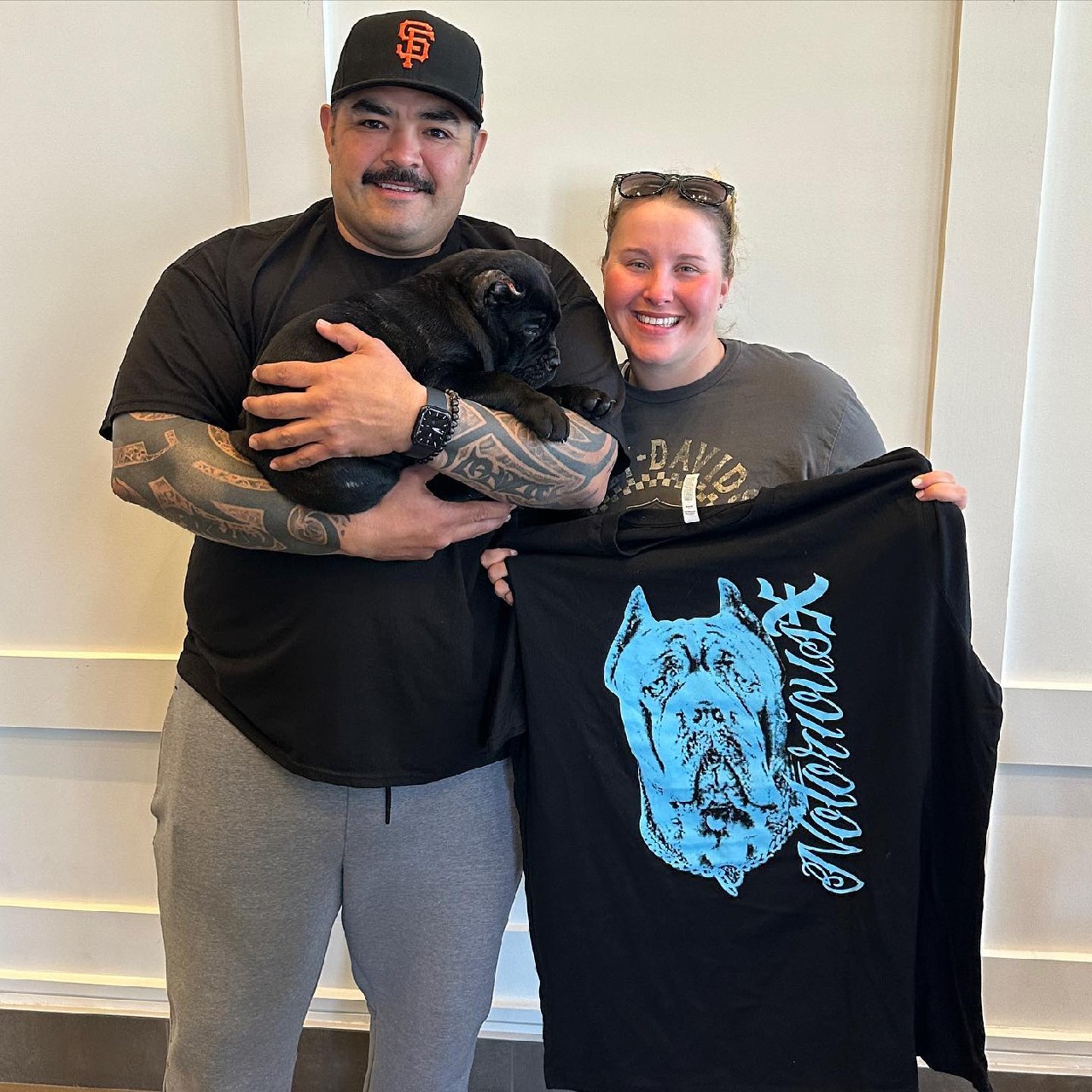
A black male, home in Nashville. Delivered out of state, and they sent this the same evening.

Collected here in Riverside. The Dallas handovers are on the Texas page.
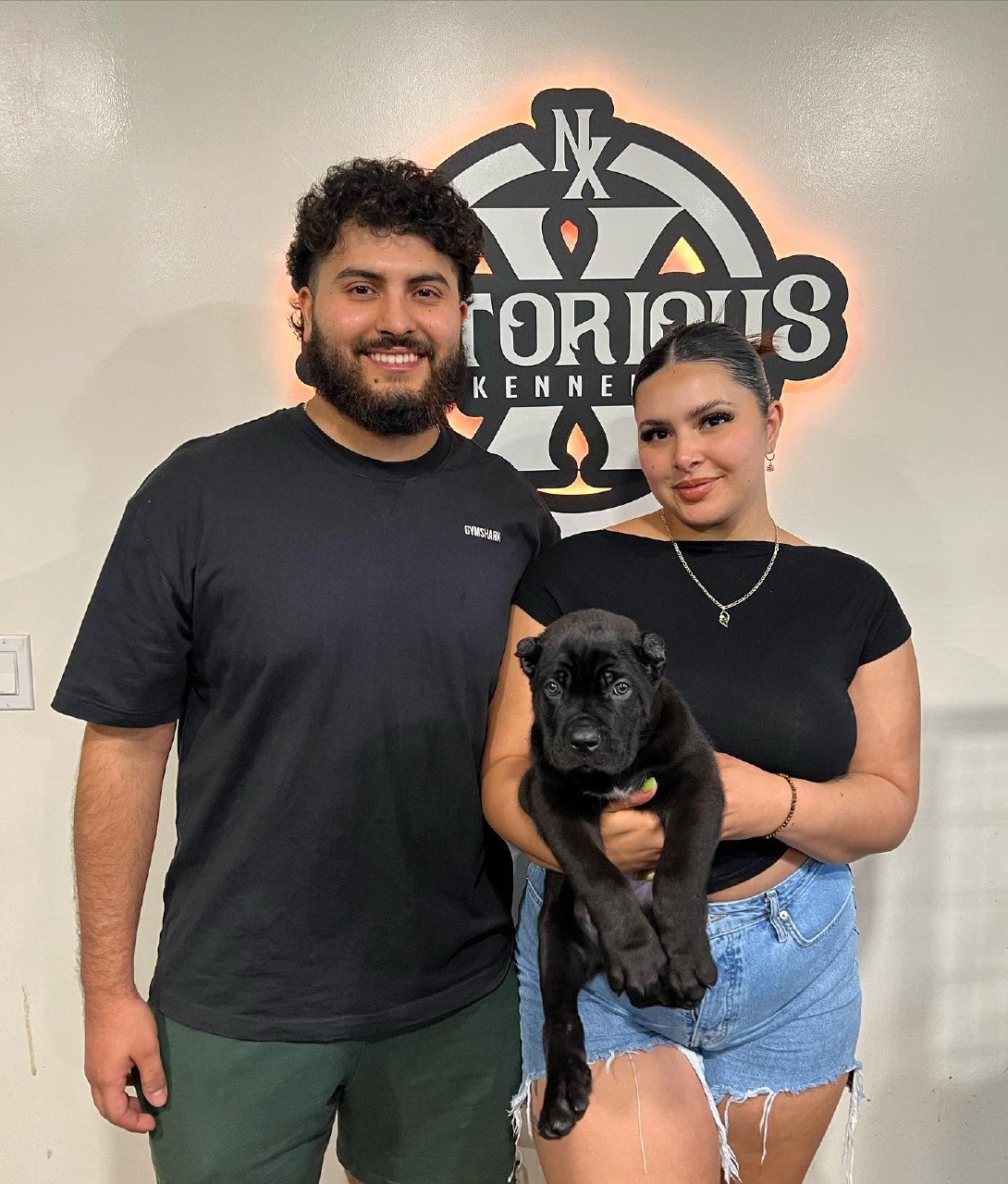
Collected from us in Riverside, at the pickup spot we keep for handovers.
What goes home with a puppy
- 6 to 8 weeks: first dose of DHPP, covering distemper, parvovirus, adenovirus and parainfluenza
- 10 to 12 weeks: second DHPP booster, plus optional lifestyle shots such as Bordetella or leptospirosis
- Wormed on schedule from two weeks old
- A written health record with every date on it goes home with the puppy
- Our dogs are registered with the ICCF, the International Cane Corso Federation, and ICCF registration paperwork goes home with the puppy
- Enough of the food it is already eating to change over gradually
- Crate trained, house training started, lead introduced
Bordetella and leptospirosis are optional and depend on where the puppy is going and what it will be doing, so we talk that through rather than giving them by default.
The full list, and what to have ready before it arrives. If you would rather take an older puppy that is further along, we sometimes have started dogs.
Getting a puppy to you
We meet buyers up to two hours out of Riverside, which covers Los Angeles, Orange County, San Diego and the desert cities. That is free, and it is what we would choose ourselves, because you see the puppy with its litter before you decide.
Further out, a puppy goes by ground transport driven the whole way, or with a flight nanny who carries it in the cabin and hands it to you at arrivals.
Never in a cargo hold. Some airlines allow it. We do not use it, and if the only way to get a puppy somewhere is cargo we will say so rather than do it.
Heat decides more of our dates than distance does. A Corso puppy crossing Arizona in July is a bad idea whatever the vehicle, so from May through September the southern runs go overnight and we will move a date rather than push one.
All three options, what they cost, and the arrival point for your part of the country.
The colours in this litter
Brindle, black and grey. Colour makes no difference to temperament, to health, or to how a dog turns out, and we do not price by it.
Black is the standard coat and the most common. Brindle is dark striping over a lighter base, and no two are patterned alike. Grey, also called blue, is a dilution of black, and it is the one coat with something genuinely worth knowing about it before you buy.
Before you commit, know the real cost
The puppy is the smallest number involved. A Cane Corso costs roughly $1,500 to $2,600 a year to keep, every year, for nine to twelve years.
Food alone is $700 to $1,100 annually for a dog this size. Medication is dosed by weight, so everything costs more than it would for a smaller dog. Bloat surgery, which is the emergency this breed actually faces, runs $3,000 to $8,000.
We would rather you had that figure in front of you now than at year two.
The full breakdown, first year and lifetime, and what our price includes.
What we know about the breed
We answer the same questions every week, so we wrote them down properly. These are about the dog and about living with one.

Temperament
What they are like to live with, and who should buy a different breed.
Size and growth
Adult height and weight, month by month, and the year that decides the joints.
Lifespan and health
Nine to twelve years, what shortens it, and the four conditions worth knowing.
Training
The first year on a dog that finishes at 110lb.
Feeding
Amounts by age, and the one supplement that does active harm.
Ear cropping
What it involves, and which of ours are cropped.
Ask us about a puppy
Tell us roughly where you are and what your household is like, and you’ll get a straight answer about which of these suits, including if the answer is none of them.