
Riverside, California
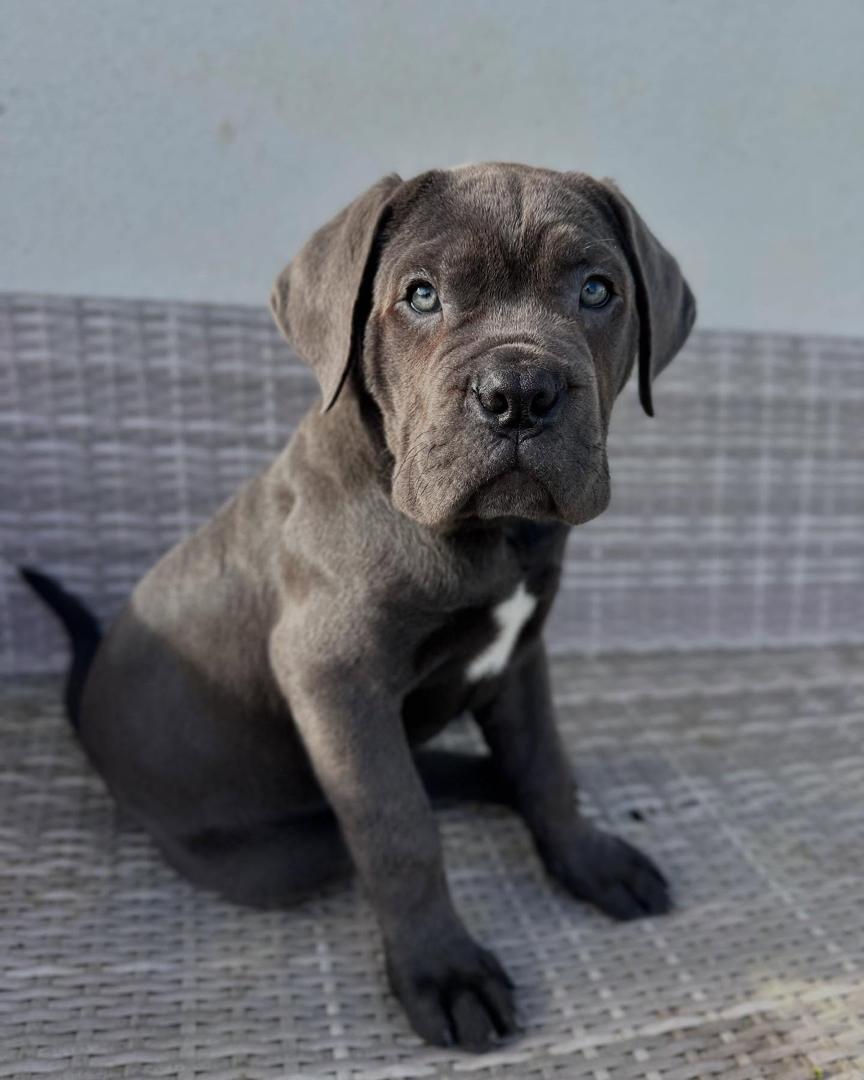
Grey and Blue Cane Corso
1 grey puppy available now. The same dog under two names, and the one coat with something worth knowing about it.
Grey and blue are the same colour. Both describe a Cane Corso whose black pigment is diluted to slate, with a grey nose and often light or amber eyes. "Blue" is the older term and "grey" is the plainer one.
Grey puppies available now
What causes it
A dilution gene acting on black pigment. It affects the whole dog rather than just the coat, which is why a grey Corso has a grey nose, grey lips and grey eye rims rather than black ones.
That is also the reliable way to identify one. A dark dog with a black nose is not a grey, whatever the coat looks like in a photograph.
It is a recessive, so two greys produce greys, and two blacks can produce a grey if both carry it.
The thing worth knowing
The same dilution gene that makes a Corso grey is associated with colour dilution alopecia, a coat condition where hair in the diluted areas becomes brittle and thin, sometimes with recurring skin irritation. It typically appears between six months and three years.
It does not happen to every diluted dog and plenty live their whole lives with perfect coats. It is not painful and it is not dangerous. It is permanent, it needs managing, and it only occurs in diluted dogs.
We’d rather you knew that before buying a grey than found it in a forum at eight months. The rest of the breed’s health picture.
Light eyes
Grey puppies frequently have striking blue or pale eyes that darken to amber as they mature. That’s normal and expected.
Eye colour in a grey settles somewhere between amber and light brown by about a year. If you’ve seen a photograph of a grey puppy with startling blue eyes, that is a puppy photograph rather than what the adult will look like.
Looking after a diluted coat
Nothing elaborate, and none of it is a treatment for the condition above. This is ordinary maintenance that happens to matter more on a diluted dog.
Bathe less than you think. Frequent washing strips coat oil, and a diluted coat is already the one with less margin. Every couple of months is plenty unless the dog has rolled in something.
Brush with a rubber curry rather than anything with pins in it. Diluted hair is more brittle, and a stiff brush breaks it rather than clearing it.
Watch the skin rather than the coat. Thinning that comes with red, irritated skin underneath is worth a vet appointment. Thinning on comfortable skin usually is not. Diet does real work here: a food with proper fat content in it shows up in the coat within about six weeks. What we feed.
Telling a grey from a dark brindle
These two get mixed up constantly in listings, and they are not remotely the same dog.
Look at the nose, not the coat. Dilution acts on every bit of black pigment the dog has, so a grey has a grey nose, grey lips and grey eye rims. A dark brindle has a black nose no matter how dark the body looks in a photograph.
The other check is daylight. Take the dog outside and look for striping. Brindle has it and a solid grey does not, and both look like an undifferentiated dark shape indoors. A blue brindle is both at once: diluted, so grey nose, and striped, so stripes in the sun.
It matters because the dilution above only applies to a genuinely diluted dog. Buying a dark brindle believing it is a grey means worrying about something that does not apply, and the reverse means being caught out.
Grey in the sun
A slate coat absorbs less heat than a black one, so on the hottest days a grey has a slightly easier time of it than its black littermate. Slightly, and it does not change the routine: this is a heavy, short-coated breed and heat is the constraint whatever the coat colour.
The one thing genuinely worth knowing is that skin under a thin or patchy diluted coat can burn. If a grey dog develops thinning across the back or flanks, keep it out of midday sun rather than dosing it with anything, and ask your vet before putting sunscreen on a dog, because several human formulations contain zinc oxide, which dogs should not lick.
Ours are raised through a Riverside summer, so anything we say about heat is what we do here rather than read off a chart. If you are somewhere genuinely hot, the summer section on the delivery page covers how we move puppies through it.
What to ask us about a grey
Fair questions, and none of them will annoy us.
Ask what the parents look like and whether either has had any coat trouble. Ask how old the dog is now, because dilution alopecia typically shows between six months and three years, so a young puppy tells you nothing either way and no honest breeder can promise you it will not appear.
Ask to see the dog outside in daylight, and ask about the nose colour if a photograph is ambiguous.
And ask to see the dog outside rather than under a kitchen light, which is where most of the confusion between a grey and a dark brindle comes from. The rest of the colours, or everything standing today.
Ask about a grey puppy
Including anything about the dilution you’d rather ask now than later.