
The breed
Cropped and Natural Ears
We do both. What cropping involves, what it costs, and which of our puppies are which.
We crop, and we also keep natural ears, and the current litter is split 3 to 3. Every card on the site says which a puppy is, so you can pick the dog you actually want rather than asking.
What cropping is
A surgical procedure done under general anaesthetic, usually between eight and twelve weeks, where part of the ear leather is removed and the remaining ear is posted upright while it heals.
Healing takes several weeks and involves the ears being taped and re-taped. It is done by a veterinarian.
The Cane Corso has been cropped traditionally for as long as it has worked, originally because a hanging ear is something livestock or an intruder can take hold of. Most Corsos in the United States are still cropped.
Why some buyers want it and some don’t
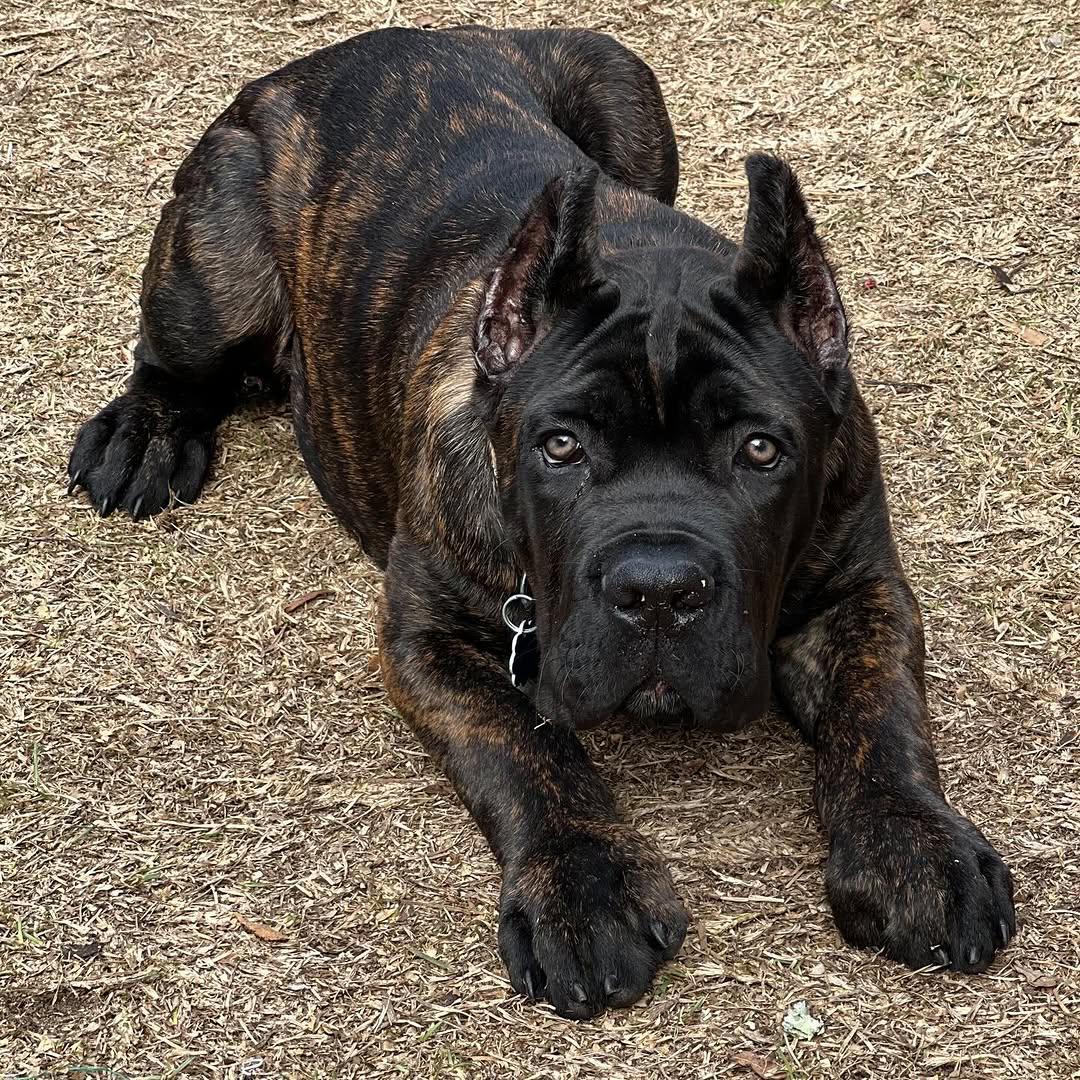
Cropped gives the outline most people picture when they picture the breed, and it’s what the show ring in this country expects.
Natural means no surgery and no healing period, and a softer expression that a lot of families prefer. Cropping is also banned or restricted in much of Europe, so a natural ear is increasingly what the breed looks like internationally.
Neither is a health decision in either direction for a normal dog. It’s an appearance decision and it’s yours.
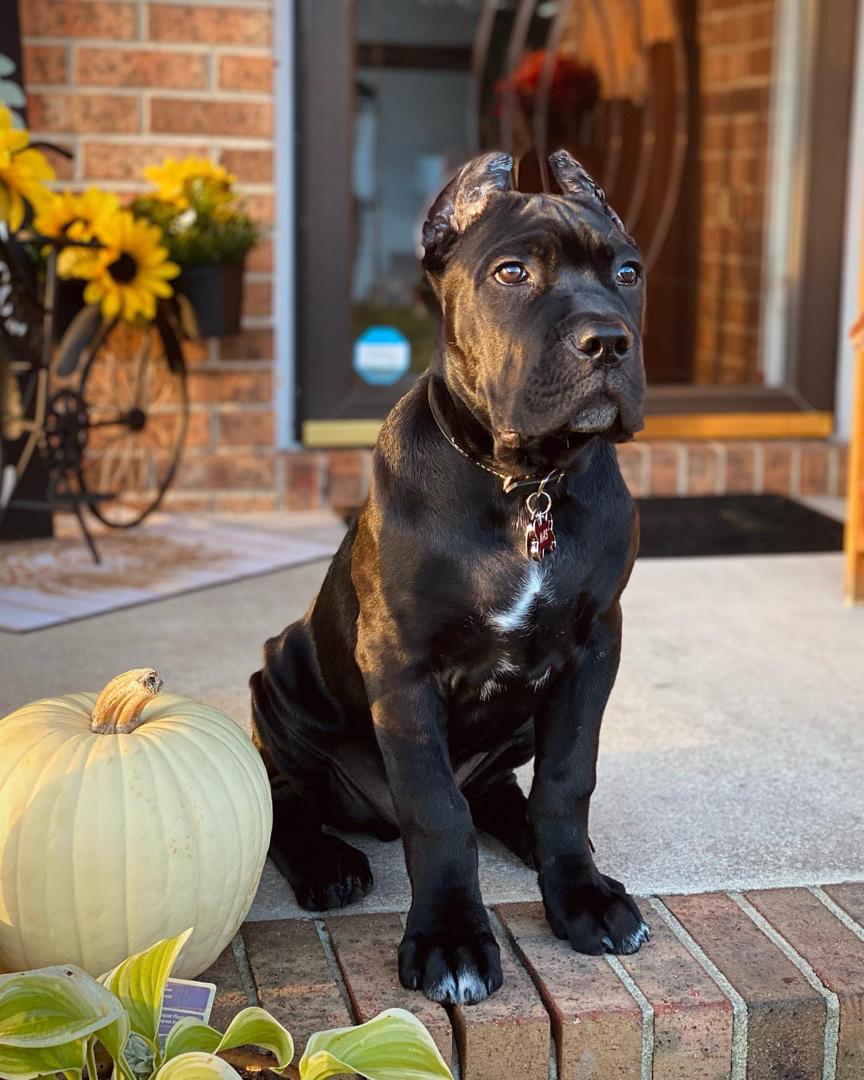
Cropped
These puppies are already cropped and past the healing stage.
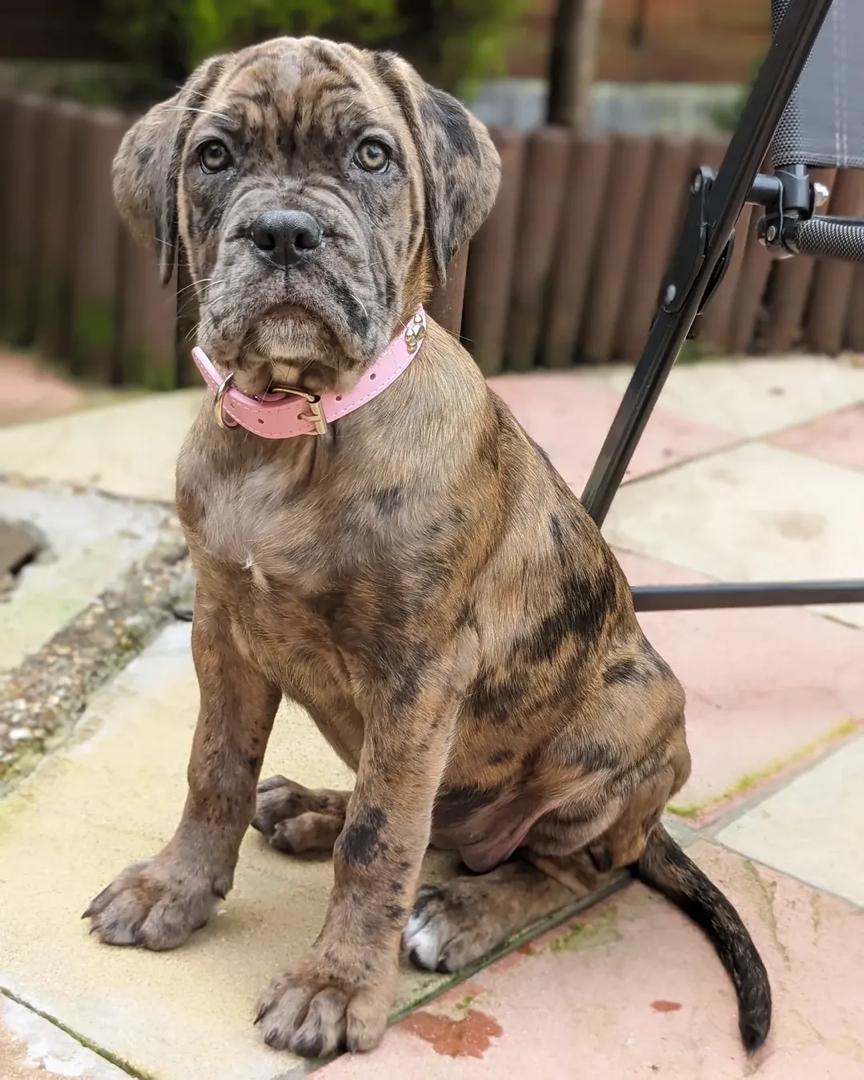
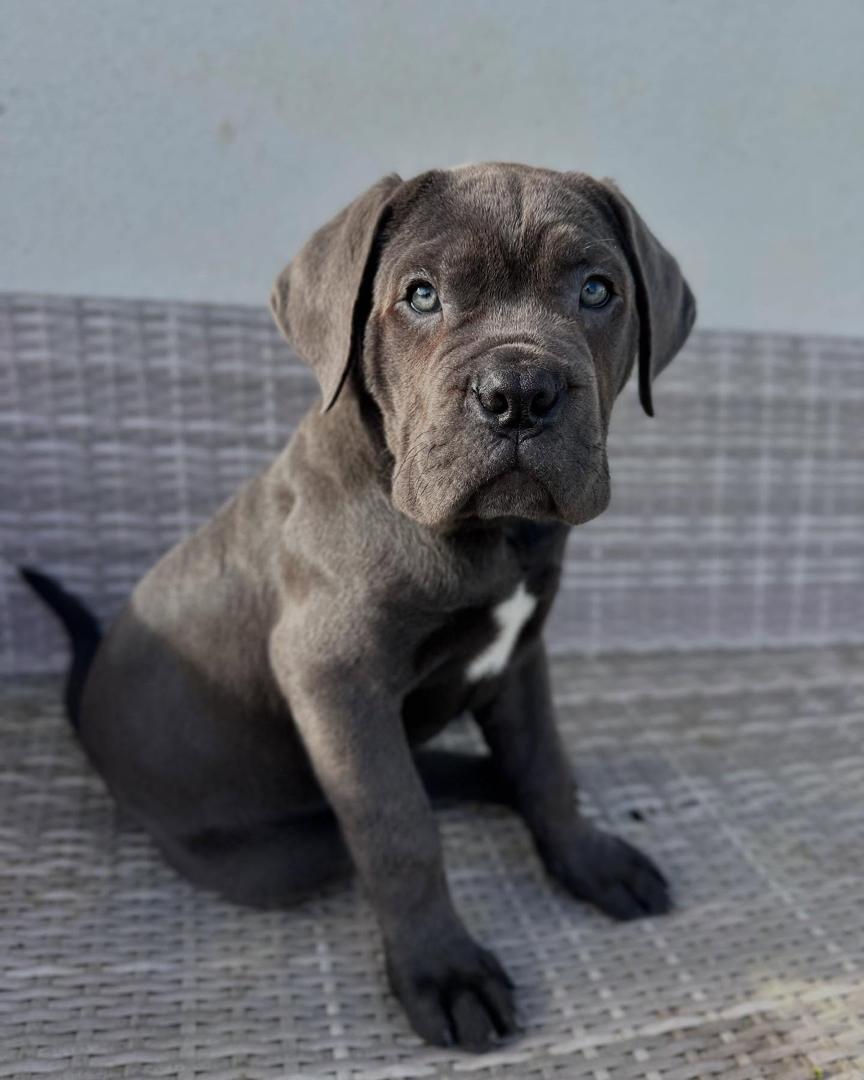
Natural ears
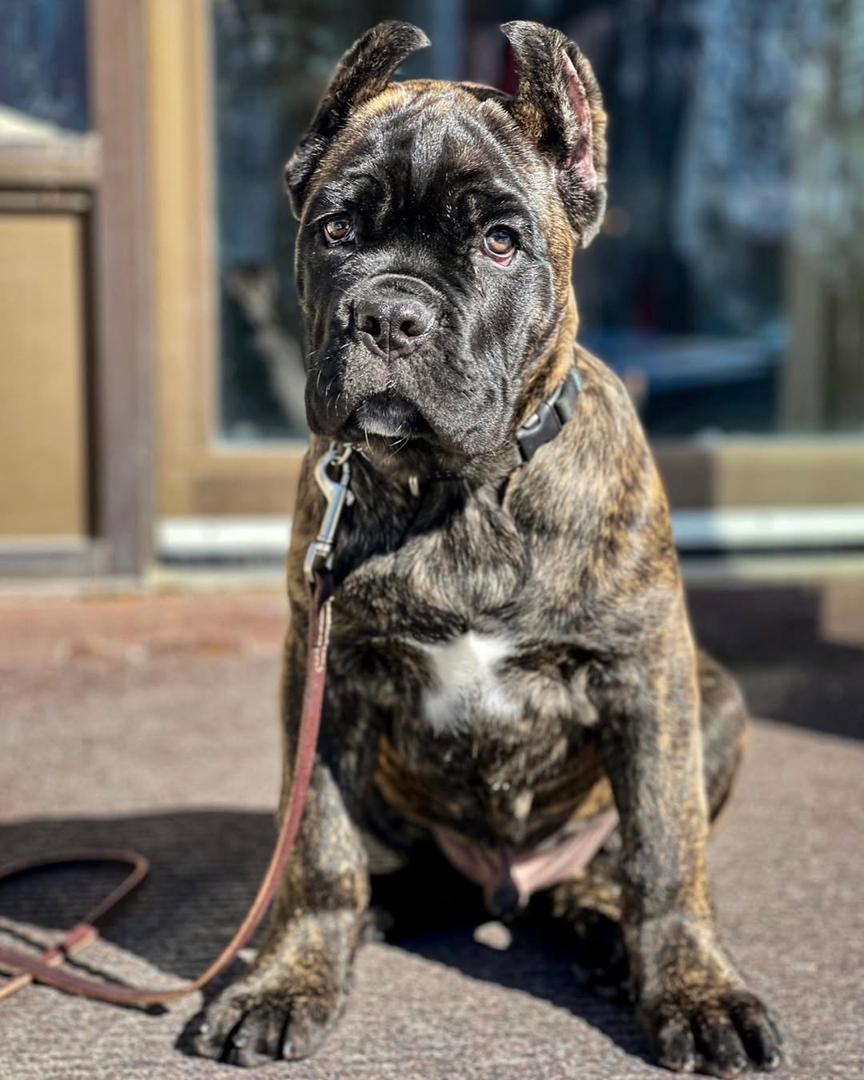
Not cropped, and won’t be.
If you want a puppy cropped that isn’t
Ask us early. There’s a window, roughly eight to twelve weeks, and after it the procedure isn’t appropriate.
If a puppy is already spoken for as natural we won’t crop it, and if you want natural we won’t talk you out of it.
It is the one decision on a puppy that cannot be revisited, so it is worth settling before you settle on a colour. The coats in this litter, and what every puppy has already been started on.
What healing involves
Worth knowing whichever you choose, because it is the part nobody describes.
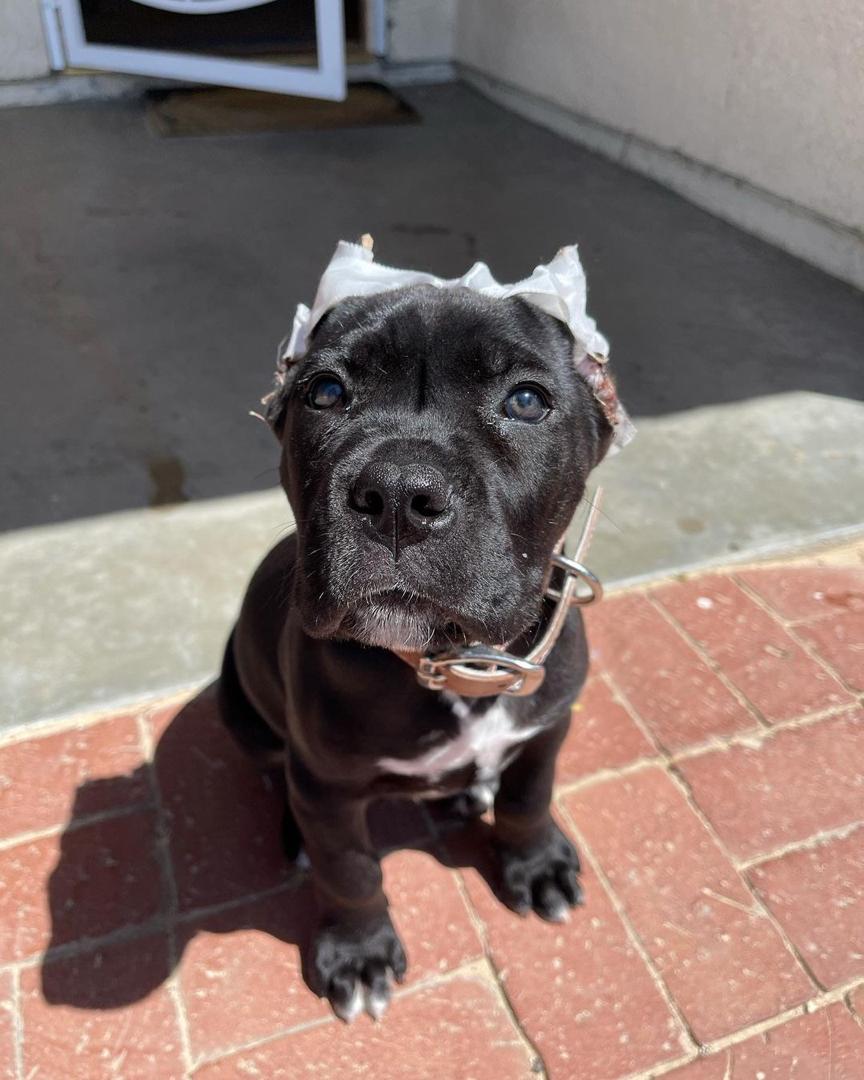
After the procedure the ears are supported upright, usually taped to a post or a cup, and that support is changed regularly over roughly four to eight weeks while the edges heal and the cartilage learns to stand. Some dogs stand quickly and some need posting for longer, and a small number never stand perfectly on one side.
Through it the puppy needs the ears kept clean and dry, needs to be stopped from scratching at them, and needs the tape changed by somebody who knows how. It is not painful once the first few days have passed, but it is a genuine commitment of weeks.
Our cropped puppies are past that stage before they go home, so what you collect is a dog with healed, standing ears rather than a project.
The styles you will hear named
Short, medium and long, sometimes called battle, show and long crop. The difference is simply how much ear leather is left.
A shorter crop stands more easily and needs less posting. A longer crop is what the show ring in this country generally prefers, takes longer to stand, and can need weeks more support.
None of it changes the dog. It is entirely appearance, and the choice belongs to whoever is going to live with the animal for the next decade, which is why we say on every card what a puppy already is rather than leaving you to ask.
Ear care either way
A natural ear hangs, which means less airflow into the canal and slightly more chance of moisture staying in it. Check it weekly, dry it properly after swimming or a bath, and get a vet to look at any dog that shakes its head repeatedly or scratches at one ear.
A cropped ear stands, so it ventilates better, but the exposed canal collects more dust, which in a Riverside summer is not nothing. Same routine: look weekly, wipe what you can see, and leave the inside of the canal to a vet rather than cotton buds.
Neither is a health advantage worth choosing on. Ear infections in this breed have far more to do with skin and diet than with ear shape. The health picture across the breed.
Where it stands legally
Cropping is lawful across the United States and is performed by veterinarians, though a handful of states restrict who may do it and require it to be under anaesthesia, which it should be regardless.
It is banned or heavily restricted in much of Europe, the United Kingdom and Australia, which is why a natural ear is increasingly what the breed looks like internationally and why show photographs from abroad look different to American ones. Some veterinary bodies here oppose it as a cosmetic procedure.
We are not going to argue the ethics of it at you. We do both, we say which each puppy is, and the decision is yours. Every puppy we have, with ears marked on each card, or the colours in this litter.
Ask which puppies are which
Or look at the cards: a filled badge is cropped, an outlined one is natural.